How Cleanly Do Adhesives Remove
Adhesive removal sounds trivial right up until a strip of paint curls off with the sensor, the hook, or the cable clip. Then it becomes a materials question, not a housekeeping one. “Removes cleanly” is marketing language; in practice, clean removal depends on three variables that interact in annoying ways: the adhesive chemistry, the substrate surface, and the amount of time the bond has been aging under load. A foam-backed acrylic on sealed semigloss drywall behaves very differently from a rubber-based pad pressed onto chalky flat paint in a humid bathroom.
What “clean removal” actually means
In technical terms, a cleanly removable adhesive should separate without one or more of these failure modes:
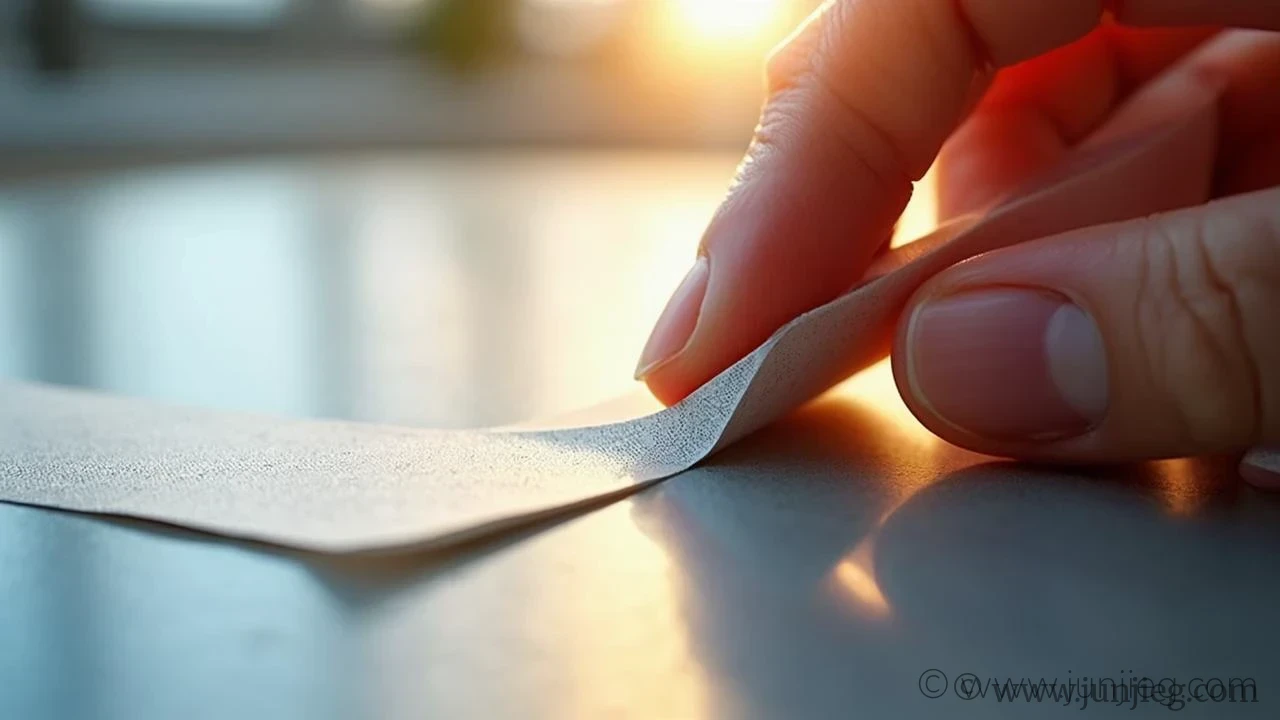
- adhesive residue left on the wall
- cohesive split, where part of the adhesive stays behind
- paint delamination
- paper-face tearing on drywall
- plasticizer staining on vinyl or laminate surfaces
Manufacturers often optimize for holding power first and removability second. That trade-off is visible in pressure-sensitive adhesives, especially acrylic systems. Acrylics generally age better and resist UV and heat more effectively than rubber-based adhesives, but they can also build stronger long-term bonds. Leave a device mounted for 18 months through summer heat, and removal may no longer resemble the easy peel shown on the box.
Why some adhesives peel off beautifully and others make a mess
A few conditions matter more than people expect.
Surface energy and paint quality
High-energy, smooth, sealed surfaces—glass, finished metal, glossy tile—usually allow the most predictable removal. Low-energy plastics, textured walls, and bargain flat paint are where trouble starts. Fresh paint is particularly vulnerable; many adhesive suppliers recommend waiting at least 7 to 30 days before application, depending on cure conditions.
Dwell time
An adhesive applied for 24 hours is not the same adhesive after 12 months. Polymer chains flow, wet out the surface, and increase real contact area. That is why a hook that felt flimsy on day one can become almost welded to the wall by the end of a lease.
Temperature
Removal force rises sharply in cold conditions. Warming the bond line with a hair dryer to roughly 120–140°F often lowers peel resistance enough to reduce paint damage. Too much heat, though, can soften paint films and create a different mess. There is always a little drama.
Real-world removal hierarchy
Here is the practical ranking, from easiest to riskiest:
| Surface | Removal cleanliness |
|---|---|
| Glass, glazed tile, sealed metal | Usually excellent |
| Finished wood, cured semigloss paint | Often good |
| Matte paint, textured drywall | Variable |
| Cheap builder-grade paint, freshly painted walls | High risk |
| Wallpaper, unsealed plaster | Poor candidate |
Best removal method
- Pull slowly, not sharply.
- Keep the peel angle low, close to the wall.
- Warm the adhesive first if it has been mounted for months.
- Use dental floss or fishing line behind rigid pads to shear the bond.
- Remove residue with citrus remover or isopropyl alcohol only after spot-testing.
Stretch-release strips deserve a separate mention because they fail differently. When pulled straight down at the proper angle, they elongate and release with remarkably little residue. Mis-pull them sideways, though, and they snap. At that point, the “clean” removal system turns into a scraper-and-prayer exercise.
The inconvenient truth
No adhesive removes cleanly from every wall. Independent tape and PSA testing has shown that substrate preparation, paint cohesion, and environmental exposure can outweigh brand differences. In plain English: the wall often fails before the adhesive does. If the paint was underbound from the start, the adhesive merely reveals the problem.
That is why professionals test in an inconspicuous spot first, especially on rental walls, cabinetry, and low-cost repaint jobs. The smartest question is not “Will it come off clean?” but “Cleanly from what, after how long, and under whose paint?” That last part tends to decide everything.
Leave a Reply