Solar Camp Lights
A good solar camp light does far more than make a tent glow. It changes how a campsite functions after sunset: cooking becomes safer, map reading stops being guesswork, and the usual scramble for spare batteries simply disappears. That sounds a little dramatic until someone is trying to find a first-aid kit at 11 p.m. with a dying headlamp. In field use, lighting quality is not just about brightness. Beam pattern, battery chemistry, charging efficiency, color temperature, ingress protection, and cold-weather behavior all matter, and they matter more than the marketing photo of a lantern hanging from a pine branch.
What actually makes a solar camp light worth carrying
The phrase solar camp light gets applied to everything from $12 garden-style lanterns to serious hybrid units with lithium batteries and USB backup charging. For camping, the useful models usually share a few traits:
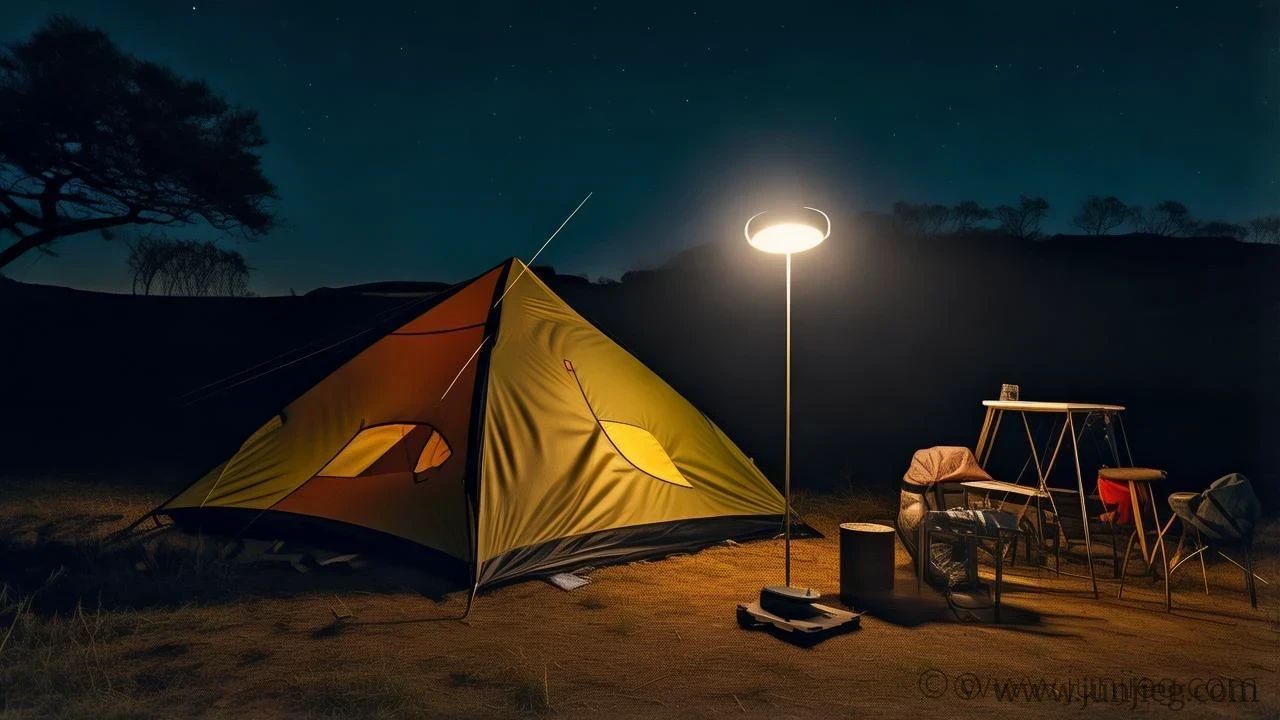
- Monocrystalline solar panels, which outperform cheaper amorphous panels in limited sunlight
- Lithium-ion or LiFePO4 batteries with stable cycle life
- Output in the 100 to 300 lumen range for tent and table use
- IPX4 or better water resistance
- Warm or neutral white LEDs, easier on night vision than harsh blue-white light
- A hanging loop, diffuser, or broad flood pattern rather than a tight flashlight beam
A common mistake is shopping by lumen count alone. A 300-lumen lantern with a well-diffused 360-degree output often feels more usable around camp than a 500-lumen light with a hot center spot and ugly glare. Human vision is strange like that; comfort often beats raw numbers.
The charging reality no one loves to mention
Solar charging sounds effortless, but campsite physics can be rude. A compact lantern panel may produce only 0.5 to 1.5 watts in real outdoor conditions. Under ideal summer sun, that can be enough to top off a small internal battery over several hours. Under tree cover, cloud layers, or winter angles, charging slows dramatically.
According to National Renewable Energy Laboratory guidance on photovoltaic performance, panel output can drop sharply with shading, heat, and suboptimal orientation. In plain English: clipping a lantern to the shady side of a backpack and expecting a full charge by dusk is optimistic at best.
That is why the most practical solar camp lights are hybrid systems. Solar is the maintenance layer; USB charging is the reliability layer.
Best use cases by camping style
Not every camper needs the same light profile.
Backpacking
Weight and recharge flexibility dominate.
- Look for sub-7-ounce lights
- Prioritize collapsible lanterns or inflatable diffused designs
- Accept moderate brightness in exchange for longer runtime
Car camping
Comfort wins.
- Larger lanterns with 200+ lumens work well
- Bigger battery banks are worth the size
- Adjustable color modes can make meal prep and table lighting much easier
Family camping
This is where solar lights quietly shine.
- Low-glare ambient light reduces the chaos around tents
- Kids handle lantern light better than direct headlamp beams
- Emergency backup matters when phones are already half dead from photos, maps, and “just one more cartoon”
Features that are easy to overlook
| Feature | Why it matters |
|---|---|
| Color temperature | Warm light around 2700K–3500K feels softer and attracts less visual irritation |
| Runtime at low mode | Low mode is what people actually use for hours |
| Charge indicator | Prevents the classic “I thought it was full” problem |
| Lockout mode | Stops accidental activation inside a pack |
| Replaceable battery | Extends product life beyond a few seasons |
There’s also durability. Campsites are not lab benches. Lights get dropped in dirt, kicked under picnic tables, and left out in dew. If a model lacks a real ingress rating, skepticism is healthy.
A smarter buying benchmark
For most campers, the sweet spot is a solar lantern that delivers 6 to 20 hours of runtime on low, includes USB-C backup charging, and weighs less than a can of soup. Anything beyond that should justify itself with better optics, tougher construction, or power-bank functionality. Otherwise, it’s just expensive mood lighting.
A solar camp light earns its place when it keeps working on night three, after the weather turns, after the card game runs long, after someone says, “Can anybody hold a light?” and nobody has to juggle a flashlight in their teeth.
Leave a Reply