Fix Weak Pool Bass
Weak bass at the pool is rarely a speaker defect in the dramatic sense people imagine. More often, it is an acoustics problem hiding in plain sight: open air, reflective water, wind noise, and small-driver physics all gang up on low frequencies. A speaker that sounds decent on a kitchen counter can feel anemic beside a pool because bass below roughly 100 Hz needs cabinet volume, amplifier headroom, and boundary reinforcement—three things portable waterproof speakers usually lack. Add wet surfaces and a crowd absorbing sound, and the kick drum disappears fast.
Why poolside bass collapses so easily
Low-frequency sound is inefficient in compact enclosures. Most waterproof portable speakers use drivers in the 40–60 mm range with passive radiators to simulate deeper extension, but there is no cheating Hoffman's Iron Law: small size, high output, deep bass—pick two. In practical terms, many palm-size speakers begin rolling off steeply below 80–90 Hz.
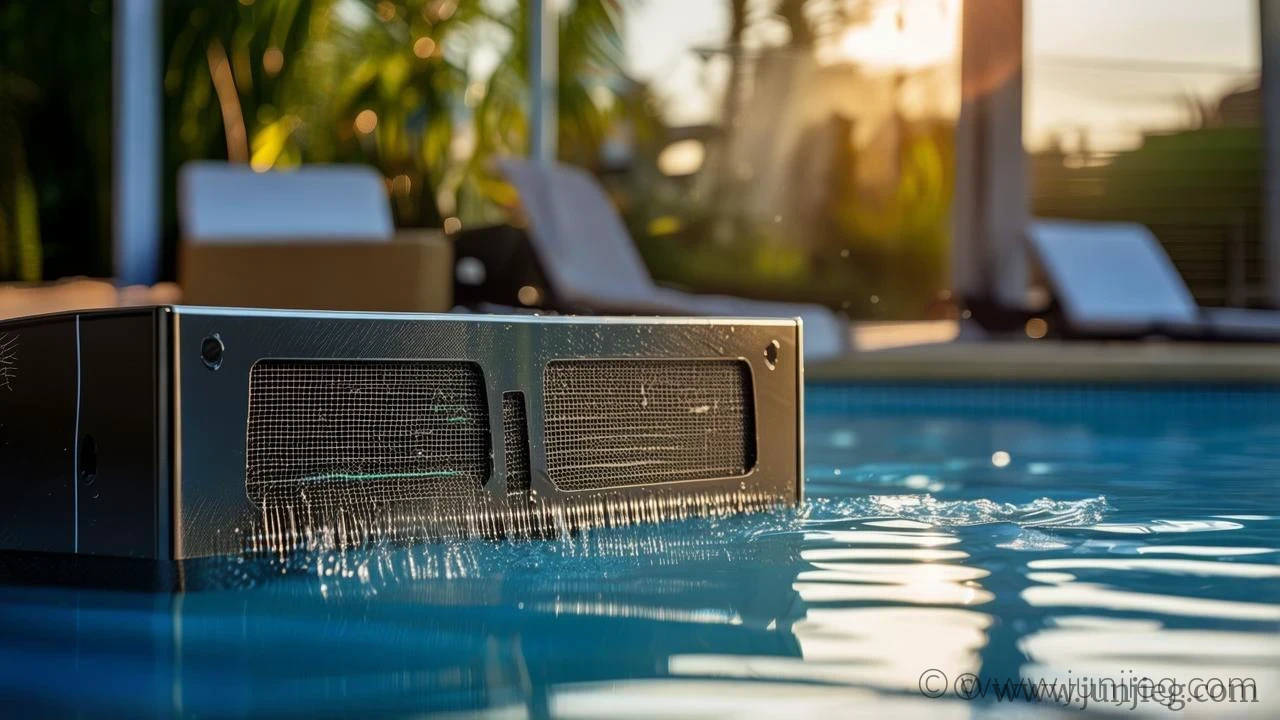
Pool environments make that limitation worse:
- No room gain: Indoors, walls reinforce bass. Outdoors, that support vanishes.
- Water reflection is deceptive: Highs and upper mids reflect clearly, which can make bass seem even weaker by contrast.
- Wind masks low-end detail: Even a light breeze can blur perceived punch.
- Distance kills impact: Bass from a tiny driver fades quickly when the speaker is five or six feet away on a float.
The fixes that actually work
Reposition before replacing
Placement matters more than most buyers expect. Set the speaker near a solid boundary—pool coping, a patio wall, or even a cooler. Boundary loading can add a noticeable lift in perceived bass, sometimes around 3 dB near one surface and more in a corner. That is not magic; it is acoustics.
- Put the speaker on a rigid surface, not a towel
- Keep it out of the center of the pool if bass is the priority
- Aim the main drivers toward listeners, not upward into open air
A floating speaker looks fun, sure, but floating often costs low-end authority.
Use EQ with restraint
If the speaker app offers EQ, avoid the rookie move of maxing out bass. Heavy bass boost on a small battery-powered speaker usually triggers DSP limiting. The result? Less punch, more pumping. A better curve is:
- Slight bass lift around 80–120 Hz
- Small cut in harsh upper mids around 2–4 kHz if the speaker sounds thin
- Keep overall volume below 85–90% to preserve dynamic headroom
Actually, many users think they need “more bass” when what they really need is “less treble glare.”
Stereo pairing helps, but not the way people think
Pairing two speakers does not double deep bass extension. Physics still wins. What it does improve is coverage and headroom, which makes bass feel fuller across a wider listening area. If one speaker sounds weak at a pool party, two matched units placed 8–12 feet apart usually outperform one larger unit placed badly.
When weak bass means the wrong speaker
Some speaker designs prioritize portability, clip convenience, or vocal clarity. That tradeoff is fine for podcasts, not for bass-heavy playlists. A useful rule: if the unit weighs under about 12 ounces and fits in one hand, expectations for EDM or hip-hop should stay modest. Models with larger passive radiators, higher wattage, and app-based tuning generally do better.
| Factor | Better for Bass | Worse for Bass |
|---|---|---|
| Placement | Against wall or hard edge | Floating in open water |
| Size | Medium portable speaker | Ultra-compact clip speaker |
| EQ | Mild targeted boost | Max bass preset |
| Volume | 70–90% | 100% with limiter engaged |
Maintenance can affect bass too
Here is the annoying part: waterproof does not mean immune. Chlorine residue can stiffen passive radiator surrounds over time, and clogged grille fabric can choke output. Rinse with fresh water after pool use, dry thoroughly, and inspect for rattles. If bass suddenly drops after a dunk, trapped water behind the grille may be the culprit—give it time before declaring the speaker dead.
Pool bass is usually not “broken.” It is being asked to do a subwoofer’s job while bobbing next to a noodle and a half-melted popsicle. Adjust the setup, respect the limits of small drivers, and the low end comes back just enough to make the playlist feel alive again.
Leave a Reply